INTRODUCTION: Physical tape has served IBM i environments well for decades, but changing operational demands are forcing many organizations to reevaluate whether it still meets today’s backup and recovery requirements. These challenges typically emerge first in backup windows, restore times, and daily tape handling processes.

Physical tape became the standard backup approach for IBM i systems at a time when it offered the best balance of cost, reliability, and compatibility. At the time, tape was the practical and affordable way to protect system backups. Today, that same approach often creates unnecessary risk, operational drag, and recovery uncertainty.
The question is no longer whether virtual tape is viable. It is whether continuing to rely on physical tape still makes technical and operational sense.
Below are the most common signs that it is time to move from physical tape to virtual tape for backup and recovery of IBM Power Systems, along with what that change solves.
- When backups run into production hours, you need faster backup performance.
If nightly backups are overlapping with morning production workloads, backup performance is no longer acceptable. Tape drives are limited by mechanical speed, positioning delays, and streaming consistency. Even with multiple drives, throughput is constrained.
Virtual tape eliminates mechanical bottlenecks. Disk-based storage allows IBM i save operations to run at far higher sustained throughput. This shortens backup windows, protects batch schedules, and reduces impact on users and applications.
If backup windows keep creeping later into the morning, it is a clear signal that tape has reached its performance ceiling.
- When restores are slow, unpredictable, or risky, you need reliable recovery.

The true measure of any backup system is recovery performance. Physical tape introduces uncertainty due to seek delays, cartridge handling, transport logistics, and media reliability.
If restores routinely take hours when minutes matter, virtual tape provides immediate access to backup data. Disk-based recovery allows rapid object-level restores, fast full system recoveries, and predictable performance.
If disaster recovery testing regularly exposes delays, missing tapes, or degraded media, it is time to remove tape from the recovery chain.
- When daily tape handling consumes staff time, you need automation.
Manual tape rotation, labeling, tracking, offsite transport, and reconciliation consume valuable IT labor. These tasks do not improve system reliability. They simply maintain an aging process.
Virtual tape automates nearly all daily backup handling. Tape libraries, offsite storage contracts, courier schedules, and physical audits are eliminated. Backup policies become software-driven and consistent.
If your team spends meaningful time managing tape logistics, virtual tape replaces operational burden with automated workflows.
- When backup failures go unnoticed, you need visibility and monitoring.

Physical tape environments often fail silently. A tape write error, a missed cartridge change, or a degraded drive can compromise backups without immediate visibility.
Virtual tape systems provide real-time monitoring, automated alerts, and detailed reporting. Backup success or failure becomes instantly visible, allowing rapid corrective action.
If you discover failed backups days later, your risk exposure is already unacceptable.
- When your disaster recovery plan depends on transportation, you need instant replication.
Tape-based disaster recovery relies on moving physical media offsite. Weather, logistics delays, and human error all add uncertainty to recovery timelines.
Virtual tape enables automated replication to a secondary site or cloud-based storage. Backup data is continuously protected offsite without human intervention.
If your recovery strategy requires waiting for a courier or retrieving tapes from storage, you are exposed to unnecessary downtime risk.
- When compliance requirements are increasing, you need consistency and auditability.
Modern compliance standards require proof of backup integrity, retention enforcement, and recovery testing. Manual tape processes make consistent documentation difficult.
Virtual tape systems provide retention automation, encryption, access controls, and detailed audit logs. Compliance becomes a built-in function rather than a manual process.
If audits require extensive manual documentation gathering, virtual tape simplifies compliance management.
- When tape hardware failures are increasing, you need a more reliable platform.
Tape drives, robotics, and cartridges degrade mechanically. Failures increase as systems age, replacement parts become scarce, and vendor support diminishes.
Virtual tape uses disk-based storage and standard server hardware, which is easier to maintain, monitor, and replace. Reliability improves while hardware complexity decreases.
If your environment is dealing with aging tape infrastructure, reliability risks will continue to rise.
- When growth is unpredictable, you need scalable storage.

Tape environments scale poorly. Growth requires additional drives, libraries, floor space, and handling processes.
Virtual tape scales by adding disk capacity. Storage expansion becomes straightforward and non-disruptive.
If backup volumes are increasing and tape management is becoming more complex, virtual tape provides a cleaner growth path.
The Technical Case for Switching to Virtual Tape
Virtual tape replaces physical tape drives with high-performance disk storage that emulates standard IBM i tape devices. Backup jobs, save commands, and operational workflows remain unchanged. The difference is in performance, reliability, and automation.
IBM i environments benefit from:
- Faster backups and restores
- Automated disaster recovery replication
- Reduced operational overhead
- Improved monitoring and reporting
- Higher system availability
The transition is typically straightforward, requiring minimal change to existing IBM i backup procedures.
Final Thought
Physical tape solved yesterday’s problems. Today, it introduces new ones.
If your organization experiences slow backups, unreliable restores, manual tape handling, disaster recovery uncertainty, or growing operational overhead, it is no longer a question of if you should move to virtual tape. It is a question of how long you can afford to wait.
For organizations modernizing IBM i backup and recovery, LaserVault ViTL delivers a purpose-built virtual tape architecture engineered specifically for IBM Power Systems environments. ViTL provides high-performance tape emulation, sustained throughput for large save operations, rapid object and system-level restores, and automated replication for disaster recovery. Its tight integration with native IBM i backup commands allows IT teams to maintain existing workflows while eliminating the performance, reliability, and operational limitations of physical tape. The result is a simpler, faster, and more resilient backup infrastructure designed for today’s production workloads and recovery expectations.
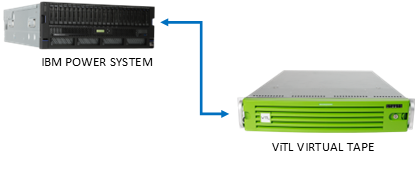
Switching from manual tape to a Virtual Tape Library isn’t just a technical upgrade – it changes the entire rhythm of IBM i backup operations. Faster backup windows, near-instant restores, fewer failures, and fully automated replication give IT teams more confidence and more time back each week.
If your organization is evaluating ways to strengthen IBM i resilience and simplify day-to-day operations, now is the time to rethink tape, visit our website https://laservault.com or reach out to me at ax@laservault.com.

YOU’RE INVITED: If you’d like to learn about automating your IBM i backups to get faster, more reliable restores, we’re hosting a quick 30-minute webinar on February 24. Attendees will learn practical strategies for modernizing IBM i backup operations using automated virtual tape technology, including how to streamline job scheduling, improve operational consistency, simplify offsite replication, and strengthen disaster recovery readiness.
This session is ideal for IBM i administrators, IT managers, and infrastructure teams responsible for backup, recovery, and business continuity.
Bonus: Attend live for the chance to win a pair of wireless noise canceling earbuds (a $100 value)!
Register now to save your spot: https://attendee.gotowebinar.com/register/5656871229877087068?source=bp

About LaserVault
For over 35 years, LaserVault (Electronic Storage Corporation) has been building reliable software solutions for IBM Power Systems. Our team combines deep technical experience with responsive support to help businesses and resellers get exactly what they need—fast.
We also partner with IBM, Cohesity, Rubrik, ExaGrid and other technical experts to deliver trusted, modern solutions.
Visit laservault.com or email info@laservault.com to request a quote, schedule a demo, or ask about our reseller program.