(This is post #1 of our weekly multi-part series: “IBM i Cyber Resilience: Backup That Works”)
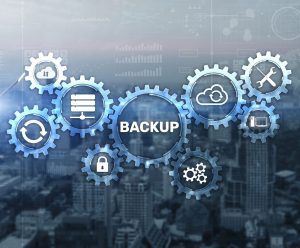
What Cyber Resilience Means for IBM i
Cyber resilience in an IBM i environment is the ability to consistently protect, recover, and restore business data and operations in the face of disruptions such as ransomware, system failures, or human error.
It goes beyond traditional backup by focusing on three core capabilities:
- Protection – ensuring backup data is complete, consistent, and securely stored.
- Recoverability – being able to reliably restore data using IBM i-native processes like RSTLIB, RSTOBJ, or full system recovery.
- Speed and predictability – meeting recovery time and recovery point objectives without uncertainty or delay.
In practical terms, cyber resilience means your IBM i backups are not just running, but ready, accessible, and dependable when recovery is required.
The Growing Importance of Cyber Resilience in IBM i Environments
Cyber resilience has become a priority for IBM i organizations as ransomware threats, recovery expectations, and audit requirements continue to increase, forcing IT teams to focus not just on completing backups, but on ensuring fast, reliable recovery under real-world conditions.

 The Hidden Risk in “Business as Usual” Backup Operations
In many IBM i environments, backup processes are built around long-standing routines using BRMS or native save commands such as SAVLIB, SAVOBJ, and SAVSYS. These processes often depend on physical tape devices, message queues, and operator intervention to complete successfully.
While these workflows are familiar, they introduce a layer of operational dependency that directly impacts cyber resilience.
Organizations evaluating options often begin looking at solutions such as LaserVault ViTL when they realize their backup success depends as much on human execution as it does on system configuration.
Where Manual Tape Breaks Down
Typical IBM i tape-based workflows include:
- BRMS-managed media rotation policies
- Manual mounting of volumes in tape devices such as TAP01
- Message queue replies (CPA messages) requiring operator input
- Offsite vaulting processes tied to physical cartridges
Failure points are well understood by IBM i teams:
- Missed reply to a tape mount message halts a backup job
- Incorrect volume loaded into a device disrupts a save sequence
- Media tracking inconsistencies within BRMS complicate recovery
These are not edge cases. They are inherent to physical media workflows.
Cyber Resilience Starts with Process Reliability
From a technical standpoint, resilience requires deterministic behavior.
Manual tape introduces variability into:
Job completion reliability
Backup jobs depend on operator response timing.
Media integrity assurance
Tape degradation is not always detectable during save operations.
Restore chain consistency
Multi-volume saves increase dependency on correct sequencing.
Eliminating physical media handling removes these variables from the equation.
Moving to Automated Virtual Tape
Virtual tape libraries present themselves to IBM i as standard tape devices while redirecting data to disk-based storage.
This allows:
- BRMS policies to remain unchanged
- SAVLIB, SAVOBJ, and SAVSYS commands to run without modification
- Tape device names and configurations to persist
Midway through evaluation, teams recognize that solutions like LaserVault ViTL maintain full compatibility with IBM i save and restore operations while removing the need for physical media handling.
Integration with Modern Data Protection Architectures
IBM i backups written to virtual tape can be:
- Replicated to secondary storage systems
- Sent to deduplication targets for storage efficiency
- Integrated into enterprise backup retention frameworks
This transforms IBM i from a standalone backup island into part of a broader data protection strategy.
Operational Impact
Technically, removing tape handling results in:
- Elimination of device mount delays
- Reduced job interruption from inquiry messages
- More predictable BRMS execution cycles
- Improved consistency in save completion status
From Operational Frustration to Strategic Change
What begins as a need to eliminate operator dependency often leads to broader modernization.
Solutions like LaserVault ViTL provide a way to achieve that without altering IBM i-native processes.
 WHAT COMES NEXT
Once manual variability is removed, the next concern becomes clear.
Can restore operations be executed quickly and reliably under pressure?
If your IBM i backups still depend on manual tape operations, it is time to evaluate the risk.
Explore your options. Book a demo or request a quote.
 Next in the series: Improving recovery confidence in IBM i environments.
For organizations modernizing IBM i backup and recovery, LaserVault ViTL provides a purpose-built virtual tape architecture designed for IBM Power Systems. It delivers high-performance tape emulation, sustained throughput for large save operations, fast object and system-level restores, and automated replication for disaster recovery, all while maintaining compatibility with native IBM i commands and existing workflows. By removing the limitations of physical tape, IT teams gain faster backup windows, more reliable recovery, and reduced operational overhead, resulting in a simpler and more resilient backup strategy.
If you are evaluating ways to strengthen IBM i resilience and streamline daily operations, explore your options at LaserVault or reach out to ax@laservault.com.
 About LaserVault
For over 35 years, LaserVault (Electronic Storage Corporation) has been building reliable software solutions for IBM Power Systems. Our team combines deep technical experience with responsive support to help businesses and resellers get exactly what they need—fast.
We also partner with IBM, Cohesity, Rubrik, ExaGrid, Pure Storage and other technical experts to deliver trusted, modern solutions.
Visit laservault.com or email info@laservault.com to request a quote, schedule a demo, or ask about our reseller program.

Ax Synar, Vice President
LaserVault / Electronic Storage Corporation
ax@laservault.com
918-640-2630